Sign up for our newsletter



The Walker and Hawkes Inspiration
 11th November 2021
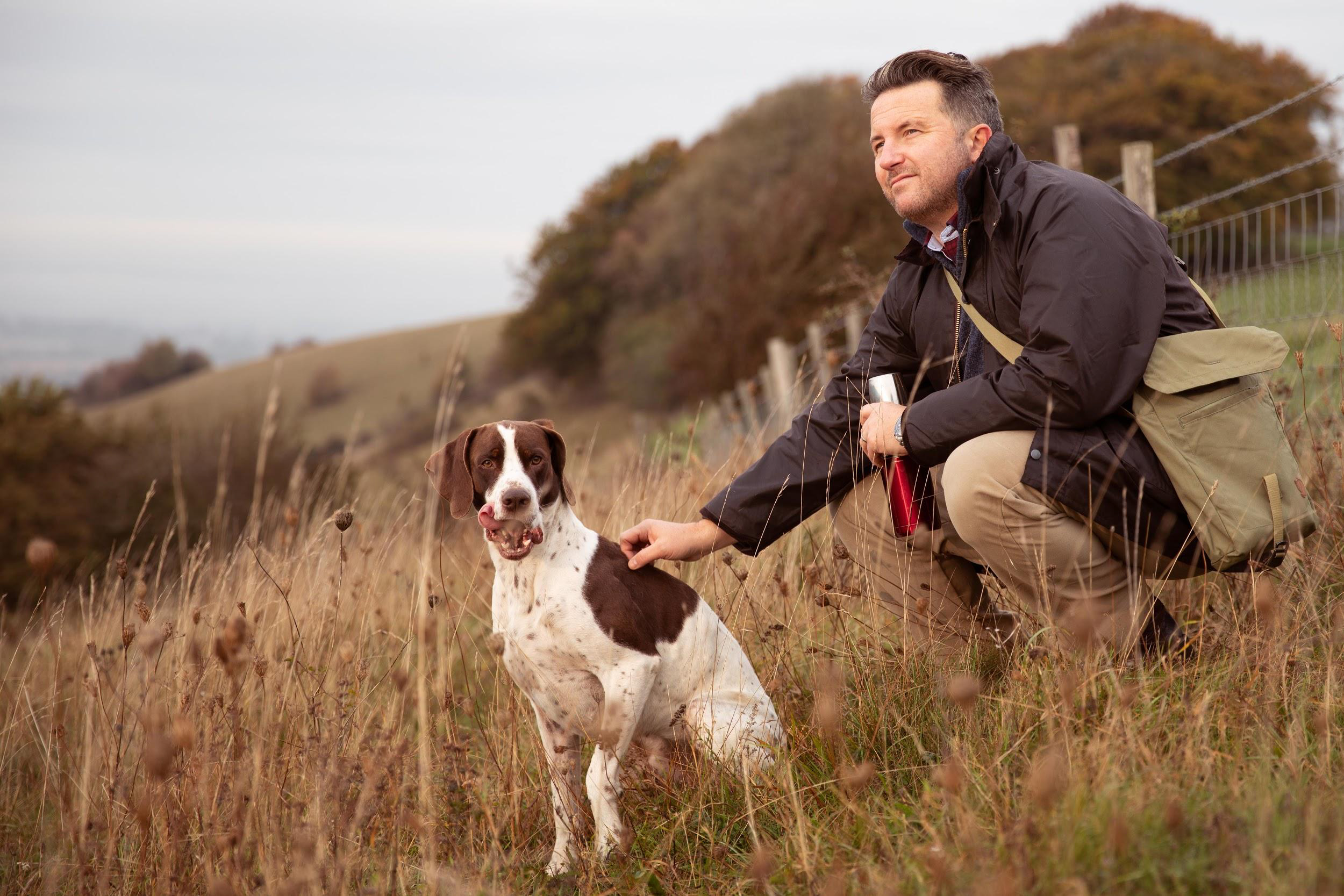
7 Best Hiking Locations in the UK
The seven best UK hiking locations cover every kind of terrain you'd want underfoot: ancient Roman wall, cliff-edge coast path, otherworldly Scottish rock formation, rolling chalk downs, the highest peak in England, three Yorkshire summits in one day, and a 96-mile Highland epic. Below, each one with its distance, difficulty, best season, and what to pack.
If you've been searching for somewhere to plan your next walk, this is the shortlist. From a half-day stroll to an eight-day expedition, there's something here for every fitness level. And given the British weather, what you wear matters as much as where you go — a few packing notes are at the end.
The 7 best hiking locations in the UK
1. Hadrian's Wall Path, Northumberland & Cumbria
Distance: 84 miles total (the popular 20-mile section runs from Chollerford to Birdoswald Fort)
Difficulty: Moderate
Best season: May to September
UNESCO World Heritage Site
Walk in the footsteps of Roman soldiers along the wall that marked the northwest frontier of the Empire. The full path stretches coast-to-coast, but the central section near Hexham offers the most dramatic views — open moorland, intact wall sections, and the remains of forts every few miles.
2. South West Coast Path — The Lizard, Cornwall
Distance: The full path is 630 miles; the Lizard section is a 14-mile loop
Difficulty: Moderate (cliff paths and steep climbs in places)
Best season: April to October
Hidden coves, sea views, lighthouse at the southernmost point of mainland Britain
The Lizard peninsula loop takes in the dramatic serpentine cliffs, hidden coves you can swim in, and the most southerly point of the British mainland. Pubs at Kynance Cove and Lizard Village make sensible halfway stops.
3. The Quiraing, Isle of Skye
Distance: 4.2-mile circular
Difficulty: Strenuous (steep and exposed in places)
Best season: May to September
One of Scotland's most photographed landscapes
A geological wonder of pinnacles, plateaus and landslips on northern Skye. The circular walk takes you past The Needle, The Prison and The Table — distinct rock formations that have drawn climbers, walkers and photographers for generations. Wind can be fierce on the ridge; check the forecast.
4. South Downs Way, Hampshire to East Sussex
Distance: 100 miles end-to-end (typically walked in 8 days)
Difficulty: Moderate
Best season: April to October
Chalk downland, Seven Sisters cliffs, ancient yew forests
Eight days from Winchester to Eastbourne along the chalk spine of southern England. The Seven Sisters white cliffs near the eastern end are the highlight, but the whole route is gentle on the legs by Lake District standards and well-served by villages with pubs and B&Bs.
5. Scafell Pike, Lake District
Distance: 6 miles return from Wasdale Head
Difficulty: Strenuous
Best season: May to September
England's highest peak at 978 m
England's highest mountain. The classic Wasdale Head route is the shortest and steepest path up. On a clear day the summit gives 360-degree views across the whole of the Lake District; on a Lake District kind of day, the view is white. Either way, take a map.
6. Yorkshire Three Peaks Challenge
Distance: 24 miles in one day
Difficulty: Strenuous
Best season: May to September
Pen-y-Ghent, Whernside and Ingleborough — all three within 12 hours
A proper test: three Yorkshire Dales summits, 24 miles, ideally inside 12 hours. The geology shifts under your feet — Pen-y-Ghent's distinctive limestone and gritstone layers are a highlight, as is the cup of tea you'll want when you finish.
7. West Highland Way
Distance: 96 miles end-to-end (typically walked in 7-8 days)
Difficulty: Strenuous
Best season: May to September
Britain's most-walked long-distance route
From Milngavie just north of Glasgow to Fort William at the foot of Ben Nevis. The route runs along Loch Lomond's eastern shore, across Rannoch Moor, and through Glencoe — three of Scotland's most striking landscapes in a single week. Bunkhouses and bothies sit at regular intervals.
What to pack for hiking in the UK
British weather changes by the hour. The essentials:
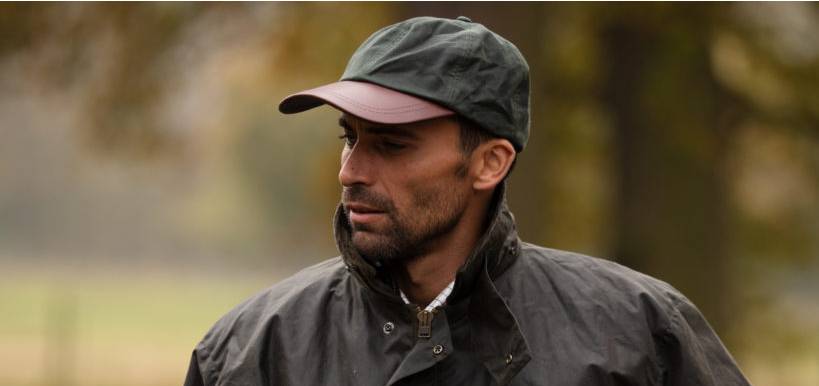
Waterproof jacket — a waxed cotton jacket is the traditional country choice, naturally water-resistant and breathable for moderate effort. For higher peaks (Scafell, the Three Peaks) consider a lightweight technical shell.
Layers — a wool or wool-blend jumper packs warm even when damp.
Sturdy boots, broken in before the walk.
Hat that stays on in wind — see our hat measuring guide for the right fit.
Map, water, food, sun protection — even in cloud.
Frequently asked questions
What is the best hiking trail in the UK?
The most-walked long-distance trail is the West Highland Way (96 miles, Glasgow to Fort William). For day walks, the central section of Hadrian's Wall Path and the South West Coast Path around the Lizard are widely rated the best.
What is the longest hiking trail in the UK?
The South West Coast Path is the longest waymarked trail in the UK at 630 miles, running from Minehead in Somerset to Poole Harbour in Dorset.
Which UK hiking trail is best for beginners?
The South Downs Way is the gentlest of the seven listed here — rolling chalk downland with no significant climbs and villages roughly every 10 miles for accommodation and food.
When is the best time of year to hike in the UK?
May to September gives the longest days, the warmest weather and the most reliable trail conditions. October can be spectacular for autumn colour, particularly in the Lake District and Yorkshire Dales.
Read More
 3rd November 2021
What is Harris Tweed
Harris Tweed is a handwoven pure wool cloth made in the Outer Hebrides of Scotland by islanders working from their own homes. It's the only fabric in the world protected by an Act of Parliament — every genuine piece carries the Harris Tweed Authority's Orb Mark trademark and can be traced back to the island where it was woven.
This fabric is peculiar to the native people of Scotland, but it has become popular nowadays and known to the fashion industry. The fabric is of the highest quality, with unique and stunning patterns. This fabric, known as Harris Tweed, got its name from where it's made- an island in Scotland named Harris island.
History of Harris Tweed
Harris Tweed is a brand of fabric created in the 18th century ago among the Islanders of Harris. This cloth was known for its fabric quality to protect the people against cold, as the northern part of Scotland was known for its harsh climate. Tweed was known as tweel in Scottish because the cloth was woven in a twill pattern before turning to Tweed. Some believe the word Tweed is a misread word.
The countess of Dunmore, Lady Catherine, promoted the Tweed and made it known to the outside world. It all started with the Paisley sisters; she recognised two sisters' talents in 1843; they were gifted in weaving fabric. She employed them to weave for his household. Harris Tweed was created through her.
Back then, when there was no currency, and often things were purchased by exchanging with other things, known as trade by barter because of its quality, the cloth was used as a means of exchange. Mechanised weaving methods were developed in the industrial revolution era and moved from manual to mechanical.
Harris Tweed has its own act of parliament of 1993, which made it the first—manufactured fabric tweed that has an act of parliament. An act was made in the Wool Act parliament to regulate the manufacture and the trade of cloth by means of Statutes that are constantly renewed to give a tremendous commercial boost to the textile activity of the city.
Harris Tweed is woven in a weaver's shed on the isle of Harris. The weaving industry develops gradually in the city along the isle of Harris. It specialises in techniques to improve production and is dedicated to softening and beautifying the cloth. The fabrics reach many European countries through the network of their commercial establishments. Due to the initiated commercial development and recognised expertise in manufacturing textiles, Harris Tweed enjoys a flourishing and quiet period. These fabrics are woven from yarns.
Coming from the Isle of Harris in Scotland, this material was carefully selected and mechanically transformed into the so-called "tweed" that made it possible to produce carded fabrics mixed with virgin wool at competitive prices. Since the sixties, machinery and technologies have been resolutely renewed; regenerated raw materials are directed towards higher quality materials that come from recycling new pieces of clothing.
Harris Tweed is so unique and what makes Harris Tweed so special is that any cloth that is officially Harris Tweed is woven in a weaver's shed on the island and carries the iconic orb logo of authenticity. Every product with the logo is handmade, such as a suit, hat, scarf, bag, etc.
In the 21st century, the positive effects and quality of the cloth began to be felt all over the world, the decisive fact of which was affirmed when, in the middle of the century, the process of regeneration of the scraps of tailoring fabrics, fabrics and clothes began to be used.
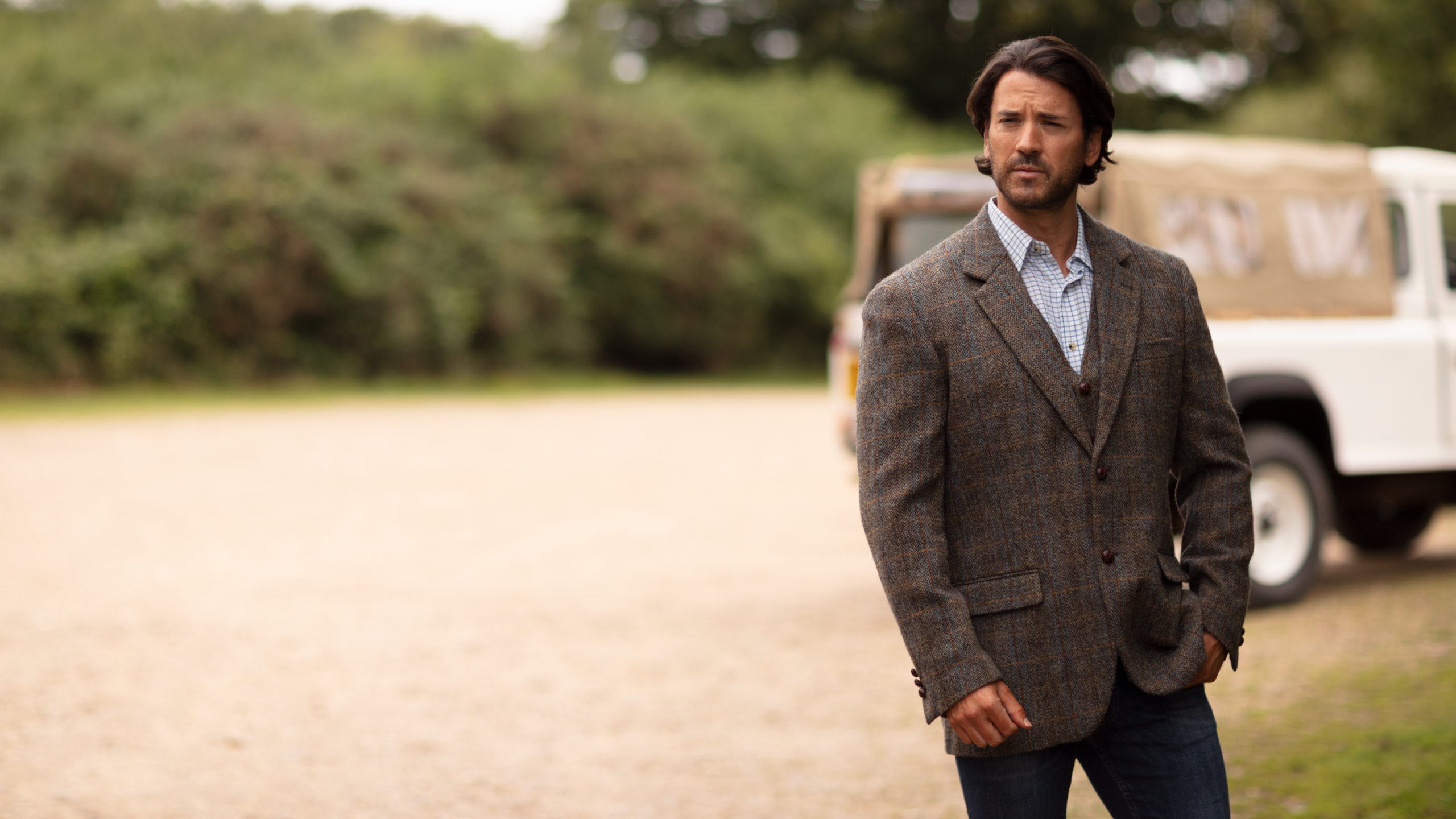
Our Harris Tweed Blazer & Waistcoat with Gloves and a Flat Cap
Harris Tweed Blazer - White Sand
How it's made
Harris Tweed is made on an island known as the Isle of Harris in Scotland. The fabric is woven and braided. The natural fibres most used to make fabric are linen, wool, cotton, and silk. The most widely used synthetic is polyester, but Harris Tweed is made with fine wool from Scotland. The yarn is dyed after sorting it out, combed, and spun. The dyed threads are weighed and blended to give the desired unique colour. The fabric is non-allergenic and biodegradable. The fibres are then transformed into yarn (spun), wound into cones, then placed next to the loom to weave the cloth.
Spinning
The material's fibres are twisted together manually or using a spindle to obtain the spinning. This twisting produces chains of short strands that together form a single body. The force with which they are twisted determines the characteristics of the obtained fabric. With a bit of twist, a fabric with a smooth surface is achieved. High twist produces tough, wear-resistant fabrics. Synthetic fibres are made into yarn in the same way as natural fibres.
The Loom
To weave fabric, a loom and rolls of thread are required with colours you want to incorporate into the material. The loom is a wooden frame which allows fixing a set of parallel threads arranged vertically (along), defined as the fabric's warp. To begin the actual weaving, horizontal threads are intertwined (across the width), called: fabric weft. The number of threads per square centimetre used in the manufacturing process determines the type and weight of the fabric.
Harris Tweed is woven on a treadle loom at an islander's home and not at a mill, unlike other fabrics through the warp and weft yarns are from the mill. The Tweed is taken back to the mill after weaving to remove any imperfections that occurred during the weaving and make it perfect. After the Tweed is made perfect, it will be sealed with an orb on the fabric.
What makes Harris Tweed an up-market fabric?
Harris Tweed is a handwoven fabric cloth made by crofters in their homes in Scotland; though there have been some mechanical changes in the process, it is still made using traditional methods. It is known for its highest quality and stylish appearance.
Harris Tweed is unique and different from other fabric cloths. It shows many colours similar to the Scotland landscape as a result of dyes from plants. These colours' true beauty can be seen with a magnifying loupe. You will see a yarn of cloth displaying multiple beautiful colours.
How to Wear
Fabrics are a fundamental element in fashion since they are part of the fall, the colour, and the texture of each garment. Harris Tweed is one of our favourite products, which gives a classy and impressive look. In addition, it never goes out of style and can be part of any style. With these tips, you will know the best way to wear Harris Tweed and become a fashion guru.
# 1. Wear with Black
The most popular Tweed is the Harris Tweed. Balancing the natural colours with black will allow you to create an infinity of looks, and the texture looks even more impressive with black leather. Wear it with a completely black outfit to look balanced.
# 2. Contrast the Colours
To give prominence to the Tweed, you need to contrast it with a light and neutral colour. The most indicated is white since it highlights black to perfection.
# 3. Take a Chance
Harris Tweed is ideal for those not afraid to be innovative or daring. Investing in eye-catching tweed garments will instantly make you stand out. It can be with applications, embroidery, and even bicolour garments.
# 4. Neon Colours
If you want to steal the eyes wherever you go, combine that tweed garment with a neon colour that will not let you go unnoticed.
# 5. Play With Shoes
Garments made of this material go with practically everything. Experimenting with shoes will make you look versatile, and you can show off the same garment in different outfits, looking very different every day.
# 6. Mark Your Silhouette
Highlighting your figure is essential, especially when wearing an outfit in a single colour, such as black. You can do it with the help of a leather belt.
Some people wonder if there's a day you can't wear tweed jackets or when you can wear them. Tweed jackets can be worn anytime, any day of the year, for a casual or formal outing.
Conclusion
Thank you for reading this blog post, and we would love to hear your thoughts in the comments below. Have you ever bought Harris Tweed before? What do you think of it? If not, we encourage everyone to give it a try! You can contact us with any questions or feedback - we'd love to help answer any queries that might be on your mind.
Frequently asked questions
What is Harris Tweed?
Harris Tweed is a handwoven pure wool cloth made in the Outer Hebrides of Scotland. Under the Harris Tweed Act 1993, only cloth handwoven at the weaver's home in the Outer Hebrides, from pure new wool dyed and spun in the islands, can carry the Harris Tweed name.
Where does Harris Tweed come from?
Harris Tweed comes from the Outer Hebrides of Scotland — specifically the islands of Lewis, Harris, Uist and Barra. The wool is dyed, spun and finished in island mills; the weaving itself happens by hand in individual weavers' homes.
How can you tell if Harris Tweed is real?
Look for the Harris Tweed Orb Mark — a small trademark stamp featuring an orb topped with a Maltese cross. Every genuine Harris Tweed garment or bolt of cloth carries the Orb Mark and can be traced to a specific weaver and mill.
Why is Harris Tweed protected by law?
The Harris Tweed Act 1993 protects the cloth from imitation and ensures the industry stays in the Outer Hebrides where it supports the local economy. It's the only fabric in the world with this kind of statutory protection.
What is Harris Tweed used for?
Traditionally jackets, waistcoats, flat caps, coats and accessories. Its warmth, durability and distinctive flecked appearance made it the fabric of choice for country and shooting wear, and it's now equally used by fashion houses for coats, bags and shoes.
Read More
 15th October 2021
What Is Clay Pigeon Shooting? A Beginner’s Guide
Clay pigeon shooting is a shooting sport that involves firing arms at a clay pigeon with a shotgun. The shot plate saucer, or short flight, is one of the two forms of sport shooting and is considered one of the Olympic sports contemporaries. The modern format of the sport was developed in the 1920s in the United States, where it is known as skeet shooting.
How It Started
The vast majority of today's shooters started out hunting. The man's need to feed was sharpening his aim and looking for more and more specific targets. Hunting then could be pointed out as one of the main branches where this sport is born.
The origins of clay pigeon shooting date back to the mid-19th century. The birth of this popular sport took place in the United States, where it began to be practiced during the stages in which hunting was prohibited. In this way, thanks to skeet shooting, North American hunters could continue to use their weapons and "kill the bug" during the closed months. In recent years, the number of skeet shooting fans has increased dramatically. The reasons for this growing popularity must be found in the positive aspect of this sport to practice aiming with our favorite weapon and in the fact that it can be done throughout the year. There are four different types of clay pigeon shooting:
The Olympic Pit:
It is the most popular and widespread discipline in sports shooting. In this practice, the shooter must face 15 target-throwing machines distributed throughout the shooting range. These machines launch plates into the air in 5 series of 25 each, plus a final series of 25 vessels.
The Universal Pit or Trap:
It is a variant of the Olympic pit. Both disciplines differ in three fundamental aspects. In the first place, in this mode, only 5 plate throwing machines are used. Second, the competition takes place in 8 series of 25 targets each, and unlike the Olympic pit, this discipline does not include a final phase.
The Double Trap:
In this mode, two machines located along with the shooting range shoot two targets at the same time, and the shooter must break them with two almost consecutive shots. The competition series consists of 25 doubles, that is, 50 targets, while in the Olympic Games, the shots are made at 150 marks plus another 50 in the final.
The Skeet:
It is one of the most mechanical modalities and requires more excellent skill from the shooter. The series, of 25 targets each, are thrown both single and double. Unlike the pit, in the skeet, the shooter can only fire one round at each target instead of two. There are 2 machines that launch the plates from each tower. The shooter must complete a course of 8 positions distributed in a crescent shape along with the firing range.
Men's Derby Tweed Shooting Jacket - Brown
Men's Derby Tweed Shooting Winston Gilet - Forest Green
Where You Can Do Clay Pigeon Shooting
The Big Shoot
Big shoot in the UK is the most prominent and premier clay shooting network with over 100 shooting venues in the UK.
Three counties
Three Counties Clay Shooting is located in Basingstoke, UK.
What You Need For Clay Pigeon Shooting
Clay pigeon shooting is one of the different sports shooting modalities that exist. Still, we will focus on common tips that serve other disciplines within this sport, such as the Olympic Pit, Universal Pit, or Trillo. Here is the list of things needed for clay shooting.
CLOTHING
Comfort is the primary goal when shooting, since there is no official dress code. Make sure you wear non-restrictive clothing, and be prepared with layers according to the predicted weather. You will want to wear non-restrictive clothing that allows a full range of motion while shooting.
WEAPONS
For first contact, any shotgun can be used, whether it is superimposed, parallel or semi-automatic; indeed, the most appropriate one would undoubtedly be a superimposed one due to its balance and behavior.
EQUIPMENT
To start hitting our first shots, we will need a basic kit that we can find with an unbeatable level of quality. We can choose a vest or shooting belt to our liking, but it is essential to always shoot with eye, head, and hearing protectors, whether they are earplugs or helmets, since we should not play with our health. Gloves are essential to prevent your hand from burning when you fire off rounds and it becomes hot.
AMMUNITION
The ammunition to use in the Olympic Pit is the 24gr cartridge, and in the 28gr threshing or Universal Pit, as a general rule, we will use 7.5 pellets, although there are shooters who choose to use the 8.
TECHNIQUE
Good foot and leg placement is essential since it gives us the correct angle and stability to obtain the necessary balance when shooting and swinging. Therefore, it is advisable to wear Trainees or reliable boots and wool socks rather than wearing heels.
Conclusion
Clay pigeon shooting is a sport that many people enjoy as an outdoor activity. It's not hard to see why; the thrill of the hunt, competition with others, and camaraderie all make it such a fun event.
If you're looking to take your next shooting adventure up a notch, don't miss our social promotions for the best outdoor brands.
Frequently asked questions
What is clay pigeon shooting?
Clay pigeon shooting is a shotgun sport where the shooter targets small clay discs thrown mechanically into the air. It's the most popular shotgun target sport and a common introduction to shotgun shooting for beginners.
Is clay pigeon shooting hard for beginners?
The basics are easy to pick up in a single lesson — most beginners hit at least a few clays their first time. Improving beyond that takes practice with technique, gun mount, lead and swing. A one-to-one lesson at a shooting ground is the standard first step.
Do you need a licence for clay pigeon shooting?
In the UK, you need a Shotgun Certificate (SGC) to own a shotgun, but you don't usually need a personal licence to shoot at a supervised clay ground — the ground's licence covers you as a customer. Rules differ elsewhere in the world; check local regulations.
What do you wear for clay pigeon shooting?
Sturdy country clothing that lets you swing and mount the gun freely — a tweed or waxed jacket with a padded shoulder, cord or moleskin trousers, breeks with shooting socks, and a brimmed hat. Ear defenders and safety glasses are essential.
What are the main clay pigeon shooting disciplines?
The main disciplines are English Sporting (varied simulated game scenarios), Down-The-Line (straightforward clays away from the shooter), Skeet (crossing clays from two towers), and Olympic Trap (fast rising clays used in the Olympics).
Read More
 27th September 2021
How To Measure Your Hat Size (with UK size chart)
To measure your hat size, wrap a soft tape measure around the widest part of your head — usually just above the eyebrows and at the centre of your forehead. Note the measurement in centimetres, then match it to the UK hat size chart below. For most adults, a head circumference of 58 cm is a UK size 7⅛ (medium); 60 cm is a 7⅜ (large).
Whether you're a year-round hat lover or a winter warrior, getting the fit right makes the difference between comfort and a forehead band-mark by lunchtime. This guide walks you through it in three steps, gives you a UK-to-international size chart, and answers the questions we get asked most.
Why you should measure your head
Choosing the right size hat is essential to actually enjoying wearing it. A hat that's too big flies off in a stiff breeze. A hat that's too small pinches the temples and leaves a band mark. A correctly fitted hat sits lightly on your head, feels secure when you move, and gives your scalp room to breathe.
Quick fit check once you have your hat: shake your head side to side, then bend forward at the waist. If the hat stays put without you holding it, the fit is right.
Beyond the fit itself, a well-sized hat finishes an outfit. It frames the face, complements the rest of your clothing, and adds the kind of polish that a borrowed-fit hat can't. The exception: one-size hats with an adjustable inner strap – those skip the measuring step.
How to measure your hat size (3 steps):
Supplies Needed
A soft tape measure, or a length of string and a ruler. A mirror helps but isn't essential.
Step 1 – Measure Your Head
Stand in front of a mirror for a clear view of your measurement.
Use either the tape measure or soft string to wrap around the widest part of your head evenly until the tape measure or string overlaps. Usually, this is above your eyebrows and at the center part of your forehead.
Check that the tape or string is not too tight or too loose.
For most accurate results, measure 3 - 4 times for consistent measurements.
Step 2 – Get Your Head Circumference
If using a tape measure, note the length in centimeters.
If using string, carefully hold onto the end-point of the measurement and line up the string against a ruler to record the size in centimeters.
Step 3 – Find Your Ideal Hat Size
Use the Hats Size Chart, such as the reference below, to find the size corresponding to your measured length. So, if your head circumference is 59 cm, your corresponding UK hat size is 7 ¼ or international size “L”.
If the measured head size is between two numbers, such as 57.5 cm, round up to the next whole number or 58cm and find the corresponding hat size.
Or, if the measured head size is between two hat sizes on the chart, choose the next larger size up.
UK hat size chart (cm to UK and international sizes)
UK hat size chart — head circumference in centimetres to UK, US, EU and S/M/L equivalents
Head circumference (cm)
UK size
US size
EU size
S/M/L
54
6¾
6⅞
54
XS
55
6⅞
7
55
S
56
7
7⅛
56
S
57
7⅛
7¼
57
M
58
7¼
7⅜
58
M
59
7⅜
7½
59
L
60
7½
7⅝
60
L
61
7⅝
7¾
61
XL
62
7¾
7⅞
62
XL
63
7⅞
8
63
XXL
Frequently asked questions
What size hat am I?
Measure your head circumference in centimetres at the widest point above your eyebrows. A 56 cm head is a UK size 7 (small); 58 cm is 7¼ (medium); 60 cm is 7½ (large). See the chart above for full conversions.
How do I measure my head for a hat?
Wrap a soft tape measure around your head about 1 cm above your eyebrows, sitting level all the way round. Measure 3-4 times and use the average. If you don't have a tape, use a length of string then lay it against a ruler.
What is UK hat size 7¼ in cm?
UK hat size 7¼ corresponds to a head circumference of 58 cm. That's the most common men's medium and women's large in UK sizing.
Can I measure my head for a hat with a piece of string?
Yes. Wrap the string around the widest part of your head, hold the overlap point, then lay the string against a ruler to read the length in centimetres.
Are men's and women's hat sizes the same?
The measurements are the same — what changes is the typical size range. Most men sit between 57-60 cm (UK 7⅛-7½). Most women sit between 54-57 cm (UK 6¾-7⅛). Use the same chart for both.
Read More
 14th September 2021
How to Reproof Your Waxed Jackets and Trousers
Reproofing a waxed jacket means cleaning the outer surface, then applying a fresh layer of wax dressing. Two steps, around an hour hands-on, restores full waterproofing. A regularly worn jacket needs reproofing once or twice a year; a lightly worn one every few years.
Done properly, a waxed jacket lasts decades. Done badly — or worse, machine-washed — and the original cotton can dry out beyond saving. This guide covers the two steps in detail, plus the common questions we get asked.
The 2-step process at a glance
Step 1: Clean the jacket with cold water and a sponge. Let it dry to the touch.
Step 2: Warm a tin of wax dressing in hot water, apply evenly with a cloth, then warm the jacket to settle the wax. Hang to cure overnight.
Important: never dry-clean, machine-wash, use hot water or use soap on a waxed jacket. Any of these strip the original wax and damage the cotton.
Step 1: Cleaning accumulated dirt, debris, or residues
Supplies: cold water, a soft sponge or cloth, a flat work surface, a plastic sheet or old tablecloth.
Bring the jacket to room temperature if it's been somewhere cold.
Lay it flat on the protected work surface.
Wipe the entire outer surface with a damp sponge — work in small circles, top to bottom.
Focus on collar, cuffs, pockets and hem — where dirt collects.
Don't soak it. The aim is to lift surface dirt, not to wash the cotton.
Let the jacket air-dry to the touch before moving to step 2. About 20-30 minutes in a warm room.
Step 2: Apply a fresh layer of wax dressing
Supplies: a tin of proper wax cotton dressing — we recommend British Millerain Original Wax, a clean cloth or sponge, a bowl of hot water, a warm room.
Stand the closed tin of wax in a bowl of hot (not boiling) water for 10 minutes. The wax melts to a liquid consistency.
Open the tin. Dip the cloth in, scoop a small amount of warm wax.
Apply in even strokes across the jacket — work one panel at a time. Less is more; you can always add more.
Pay extra attention to seams, pockets and the underside of collars — water gets in there first.
Once the whole jacket is coated, warm it with a hair dryer on a low setting (or hang in a warm room) to settle the wax into the fibres.
Hang the jacket overnight to cure. The next morning it's ready to wear.
Frequently asked questions
How often should I reproof my waxed jacket?
Once or twice a year if you wear it regularly outdoors. Every 2-3 years if it sees only occasional use. Signs it's time: water no longer beads on the surface, the cotton looks lighter or dryer in places, or the jacket has lost its sheen.
Can I wash a waxed jacket in the washing machine?
No. Machine washing strips the wax and damages the cotton fibres beneath. Sponge cleaning with cold water is the only safe method. If a stain needs more attention, a specialist wax-jacket cleaner can handle it.
What wax should I use to reproof a jacket?
Use a proper wax cotton dressing made for the purpose — like British Millerain Original Wax. Don't use beeswax, candle wax or DIY mixes; the formula needs to be designed for cotton fibre absorption.
Can I dry a waxed jacket in a tumble dryer?
No. Heat in a tumble dryer melts the wax unevenly and can damage the cotton. Always air-dry.
How long does the reproofing process take?
About an hour of hands-on work — 15 minutes cleaning, 30-45 minutes applying the wax. Then leave the jacket to cure overnight before wearing.
Read More